
I’ve been thinking about writing this post for a while because, as someone who – as I said when I started this blog – only knows what she thinks when she starts writing, I need to process my mother’s death. I could do that on my own and with friends but, as I have already shared (e.g. here) my experience as she suffered increasing frailty, it seems right to blog on this too. My mother’s care was, after all, one of the reasons I retired. Death is part of life, and coping with the death of others is one of those inevitable aspects of being a retired/retiring person. Perhaps telling the story will help someone else: I hope so.
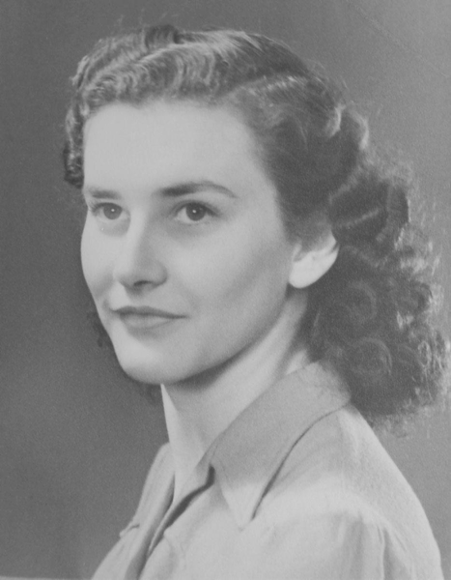
This was my mother in her twenties. She died last month: she was a very youthful-looking 91. She’d been feeling a bit off-colour over the previous weekend – not interested in a ride in the car, not interested in Sunday lunch at our place (that was WEIRD…). On Monday, after the lovely carer had been in for the bath and hair wash experience, I phoned and she was OK, but lacking in energy. After lunch I went round to her flat earlier than I’d said I would, and found her in great distress on the floor. She hadn’t been able to press the alarm button she wore round her neck, at least partly because her arm was trapped – and turned out to be broken. The 20 minutes waiting for the ambulance while trying to comfort her … well, you can probably imagine. Only, make that worse, because she appeared to have developed severe vertigo and was clinging on to the table leg ‘in case I fall’, being unable to recognise that she was already on the ground. Excellent service from the ambulance staff, who correctly diagnosed the break and managed to get her up by the use of an inflatable seat thing, but once we could see her face it was clear something else was going on, as she had classic stroke symptoms. That seemed to correct itself by the time she was taken into the ambulance, but it was on record as a concern.
And here Covid-19 kicked in, even though she didn’t have it, as the hospital later confirmed. Because, of course, due to Covid-19 prevention protocols, I couldn’t go with her in the ambulance, and nor could we follow in the car. I said goodbye to her in the ambulance, reminded her – in a phrase I coined decades ago when she was in hospital – ‘You’re a fighter, not a blighter’ – and tried to look positive and cheerful. It was by no means her first trip to the hospital after a fall, but it was to be the last one. I didn’t see her alive again.
All credit to the staff at A&E who phoned to keep me informed of the many tests they were performing and of her later admission to a ward. It was clear that being 91 was no reason not to do x-rays and scans. A brain scan was apparently OK; the broken arm was a particularly nasty one and would mean a brace rather than an operation, and that would mean she couldn’t use her walking frame and would need rehab, which would be discussed later that week. However, they told me, she was being sick; I clarified that this was new.
The next day, properly masked, I dropped off her reading glasses at the hospital. I was allowed to go as far as the ward door, but no further. This was excruciatingly painful because the nurses made it clear she was in that bay of 4 beds just through the wall next to where I was standing… but I couldn’t go in. Later in the day, I had a message to say she wanted to speak to me. When I called back, the dedicated phone line for calls to patients just rang and rang. Eventually I gave up and called direct to the ward, and the nurse discovered there was something wrong with the patient phone. She went to change the batteries or some such basic task, and then checked it worked before putting it through to my mother. Mum was distressed and sounded slurred. She said everyone was very nice to her and that I’d got to ‘help get me through this’ but she also announced that she ‘couldn’t go on’. Yes, I’m clinging to those words because that was the last time I spoke to her, and I hadn’t had a day without speaking to her in many, many years.
A doctor then took over the phone and I observed that my mother didn’t normally talk like that. If I’d been able to visit, I’d have noticed at once that her slow and slurred speech was all wrong, and would have told the staff. I told the doctor that my mother normally sounded like me, to the point where we could answer the phone for each other; that she talked quickly and was mentally 100% and usually beat me at Scrabble. The doctor found this very useful because of course she had no other way of knowing it. She told me that the neurological team would be coming in the following morning, because they’d had another look at that brain scan and something wasn’t quite right. She asked if I wanted to be called in the night if anything deteriorated – I said yes, any time – but she also said they weren’t expecting this.
I slept OK, considering. I woke up and thought ‘No call! She’s OK then!’ And the phone rang: the hospital, really really sorry but your mother has passed away; we thought she was asleep but she wasn’t. Did I want to visit her body? Yes, definitely, so I picked a flower from a plant she particularly loved, and we went up to the hospital. She looked very peaceful.
The shadow of COVID-19 falls on everything to do with death. We were ‘lucky’ because at the point in the pandemic at which her funeral took place the crematorium allowed 20 people, and it’s also one which offers online access to the event, and then to a recording that’s up for 28 days. People who would never have been able to attend in normal circumstances were able to watch at home, and many of them have said how helpful they found this. I planned the funeral quite quickly, going for simplicity, and it was one of which I know – confirmed by others – she’d have thoroughly approved. I included her requests for an Elvis song (I’ll remember you, with the line about the ‘endless summer’ feeling very appropriate to the lockdown) and for everyone attending the funeral to have a lottery scratchcard. The tribute was given by a priest who visited her and knew how she ticked. People travelled long distances to be there. But – Covid-19 again – we couldn’t have them all back for a meal and a drink, only some family members, a maximum of six, to eat in our garden. That felt sad, especially as my mother loved to feed people.
I was surprised, delighted and overwhelmed by the number of cards and messages that came in after she died. I knew she spent a lot of time on the phone, but as I called all the names in her address book so many said ‘Oh, I only spoke to her last week!’ And so many told me about times when she had helped them, advised them or just supported them. It was wonderful to hear, because in recent years the side of her which I saw was the scared, hurting, tearful side, which she suppressed when anyone else was around and instead became the life and soul of the party.
One thing I’ve been thinking about since that day is naming. My mother’s many names reflected the different sides of her which she presented to others. She was baptised as Margaret, and in my teens I started calling her that, as I called both my parents by their first names; yes, it sounds pretentious, but somehow it happened and they were fine with it. After all, they both had identities other than ‘mum’ and ‘dad’, and I remember once my mother railing against being called ‘Helen King’s mother’ as if that was all she ever was! When she was young, though, my mother was Micky, and friends and family from a long while back still called her that. For the last twenty years of so of his life, my father called my mother Jim. No, I’m not sure why. When she moved to our town a year after my father died, mum also became M. That was a clear James Bond reference and it was my husband who started it; it stuck, and some of our neighbours used that as their name of choice. In her boxes of memorabilia, she had kept all my father’s wonderful letters from his period of National Service, and at that time he was calling her Podge; I have no recollection of hearing that name. As a person of that generation, she also expected to be called ‘Mrs King’ by those providing a service, and found the current practice in hospitals of going for first names rather impudent.
Reflecting on this, there was something special about the funeral using her baptismal name again; a return to who she was when she started out on life. All of her names reflected something about how the users saw her, but finally she returned to the full person she always was. To quote from Isaiah 43:1:
Do not fear, for I have redeemed you;
I have called you by name, you are mine.
 The retiring academic
Thanks for this, Helen, and sorry for your loss. My own mother died a year and a half ago. She was born the year before you. I envy you for having so much time with yours (nearly double the time I had with mine), though I imagine it’s never enough.
LikeLike
Thanks, Iarla. No, it’s never enough. So many things unasked and unsaid.
LikeLike
What a beautifully written piece and tribute to your mother; you made parts of her come alive off the page.
I still have a snort of coffee sloshing around in my nostrils from when I read this unexpected line: “for everyone attending the funeral to have a lottery scratchcard.” What a wonderful idea. I hope someone came up a winner for at least a few pounds.
LikeLiked by 1 person
I won £1 but I’m looking out for attendees who suddenly disappear to the Caribbean…!
LikeLike
Helen, very sorry for your loss. Death is never easy, but Covid restrictions have made it unimaginably harder for those left behind. I’m so glad you got all those good memories from her friends. Take care.
LikeLiked by 1 person
Thanks, dearest Helen, for sharing your reflections. You have honored your mother’s passing from this life in the same caring way that you enriched her abiding in it, and that is achievement enough. Yet characteristically you have done so much more by making ethical meaning of her last days in these unimaginable times. I am grateful.
LikeLiked by 1 person
So sorry for your loss, Helen.
My mother was an Elvis fan too, and when she died suddenly two years ago aged 73 we left the crematorium to ‘Can’t help falling in love.’
LikeLiked by 1 person
I’m very sorry for your loss. In time, I hope you will take comfort in your happy memories. Sending you a virtual hug.
LikeLiked by 1 person
Thank you for this post Helen and for your generosity in sharing your experience and loss. Your reflection on the names that follow us through life has made me reflect too. We played Elvis ‘For the Good Times’ when we lost my mother a few years ago. She was born in the same year as him and was a fan. This brought that back to me.
LikeLiked by 1 person
Dear Helen, You express your feelings for your Margaret your mother so incredibly well. All the love you shared over the years comes shining through. Writing about the loss of someone dear to us is emotionally hard. It is also a healing process, as I found out after our son died far too early. Looking back at ones thoughts a few months, even years later, you realize how far you have progressed in your own healing. Thank you Helen for sharing this.
LikeLiked by 1 person
Dear Helen, So sorry to read of your mother’s death. We all know it will happen to us all one day and loosing our parents makes our own end feel one step nearer. It was no doubt made more difficult for you all by the conditions of lockdown.I could identify with your feelings in your account, which brought back some of my own memories and feelings, from loosing my own mother, including the inevitable feelings of ‘if only’. I like the lottery scratch card idea!! Lots of love Janette xx P.S. My phone number is the same, and I would love to hear from you any time.
On Mon, 13 Jul 2020, 16:29 The retiring academic, wrote:
> fluff35 posted: “I’ve been thinking about writing this post for a while > because, as someone who – as I said when I started this blog – only knows > what she thinks when she starts writing, I need to process my mother’s > death. I could do that on my own and with friends but, ” >
LikeLike
[…] my mother on a lockdown tour of churches she knew, to see what they were all up to. My mother has since died. At my church, things have now moved; from pre-recorded in people’s homes, to live streaming […]
LikeLike