
Some people fall over: others have a fall. There’s an important difference. When you’re young, you fall over, and you get up. Nobody makes much of a fuss. Life resumes immediately after a few moments of interruption. When you’re older, however, you have a fall. This can be devastating. My father had a fall, broke his hip, and died shortly after the operation to mend it. A neighbour had a fall, then two more, and on hitting the magic number of three was referred to the Falls Clinic. This involved several days of talks and exercises, but she was quite pleased that there was also a free lunch. The training hasn’t stopped her falling, and last year she managed to do it yet again while we were outside my house, leading to some first aid and a call to 111, except the delay in them ringing back was so long that she decided to go home and go to bed and if there was a fracture on her brow bone then fine, she’d rather not faff about with X-rays.
My mother had a fall, another fall (earlier one here) just before Christmas week. It was her third one this year, but due to her age she’d already had a referral to a Falls Clinic, and a one-hour assessment, but then they cancelled the clinic she was to attend, and months later when a new one was set up she was ill and couldn’t go. This time, she fell in her flat, and she pressed her emergency button, and as it happened I was already walking round there when the call reached me. There was no evidence of concussion or breakages but I couldn’t get her off the floor. When my husband joined me, we managed to manoeuvre her into a chair but her legs kept giving way spectacularly so it was clearly an ambulance job. We were very lucky in that the ambulance arrived within an hour, and the paramedics were – as ever – wonderful.
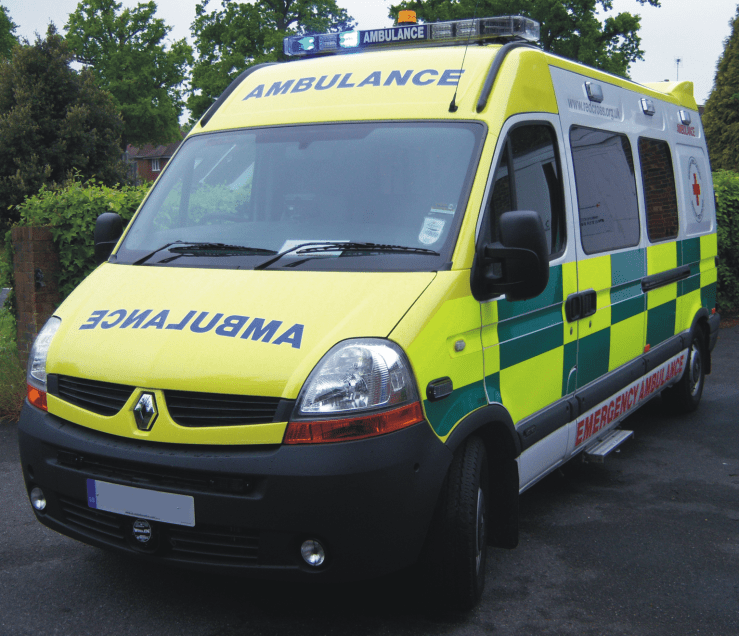
By Owain.davies – Photo credit to Owain Davies – Own work, CC BY 3.0, https://commons.wikimedia.org/w/index.php?curid=6771327
After that, things became rather less wonderful. At the big hospital, we were only waiting for the A&E assessment stage for about 40 minutes. However – comment 1 on the NHS – the lovely ambulance paramedics wait with the patient until the ‘handover’ to the assessment section, and are thus unable to respond to other urgent calls… for as long as it takes. This doesn’t seem like a good use of two highly-trained people’s time. While we were lucky in getting to assessment quickly, the rush of people behind us were still there a while later. But if the ambulance people were able to leave more quickly to pick up another sick person, then the queue for handover would be even longer… The handover is odd because – comment 2 on the NHS – although the ambulance staff have written up the story so far on a screen, the hospital person writes notes by hand. Why??
In the assessment section it was decided to move mum to ‘Majors’, another section of A&E which involves cubicles with beds, and also ‘Majors chairs’. She was at the ‘bed’ level. It eventually became clear that she was going to have various X rays (knee, hip, chest – for pneumonia) and tests (bloods, urine) and would be in Majors overnight. Comment 3 on the NHS – impressive range of checks here, not cheap. I went home and failed to sleep much, before returning to Majors in the morning and staying with mum other than some trips for food and loos, during which I saw the ‘Majors chairs’ all full and people sitting on wheelchairs because there were no seats.
The diagnosis was a urinary tract infection which would apparently account for what the ambulance staff had called ‘losing her legs’. The staff considered discharging her with antibiotics, but realising that this was a 90-year-old who, while entirely lucid, was pretty shaky from what had happened in the last 24 hours, suggested instead a Community Hospital. Our local one – 10 mins walk – was full so they found a bed in another one which has a unit dedicated to rehab of the elderly. Comment 4 on the NHS – that is an amazingly good service. We then waited hours for a private ambulance service used by the local health authority for hospital transfers, and by the end of the day mum was established in a small friendly ward in the Community Hospital. Relief all round: also, exhaustion. Since then, on the days when service was normal, as opposed to the Christmas and New Year dates on which physio and OT aren’t functioning, mum has had helpful sessions rebuilding her confidence in walking with her frame, and in simple things like getting out of bed without help.
However, and you knew there would be a however, this has not been plain sailing. The unit likes patients to have the social experience of eating together. Mum was willing to go to the Day Room for lunch, but found it depressing being with people who couldn’t eat without help. There was rather a lack of conversation around the table, too. So she is allowed to eat in her little ward – and it’s good to have that option. The meals themselves though are a real issue. There are usually three options but as someone who can’t do spicy food and can’t eat onions or garlic, she often has no choice, or can’t eat any of it. She eats well at home and she likes her food, but she quickly reached the point where she was distressed that she was surviving on sandwiches. There are notices all over the place saying that the staff can heat up meals brought in for patients but only if they are supermarket ready meals. And you try finding one that doesn’t contain onions, let alone the many other things her IBS rules out. Also, I do wonder about the policy, because you can keep a ready meal at entirely the wrong temperature, but nobody seems to have thought of this. After some days of this, I asked if I could bring in a home-made (by me) meal. Yes, I was told, in the circs that was fine. So I did. But after I’d gone home, the staff on duty that day refused to heat it and said mother could only have it cold. Fish pie. Cold. I think not.
When I found out, I went in and asked what was going on. The nurse I saw then said that the nurse who’d told me I could bring in food was wrong. Hmm. Comment 5 on the NHS – one of the ‘ward values’ trumpeted on a poster is ‘consistency’. But here, as in other areas, it all depends who you get. I was quite cross and asked why they were not consistent, and complained that they were starving my mother, then went to her bedside. Within a few minutes a senior nurse came and told me I definitely could bring in food but I would need to sign a disclaimer for each meal. So now I get there at 11 when visiting starts, ask someone to put the food in the fridge (visitors are forbidden to go into the kitchen) then get a form, which I sign and my mother signs, with a staff member witnessing our signatures, and then my mother will get my food for lunch. Just as well I persisted, then. Comment 6 on the NHS – what about people who don’t persist?
The physio people are wonderful and very caring. I pointed out that mum was getting out of bed on her left, whereas at home she gets out on the right, which could be confusing when she eventually gets back to her own bed. The physio moved things around to replicate her normal situation. When it was decided that a commode chair by the bed could be helpful at night, the physio did a little diagram of where it should be placed to mimic what she’ll have in her flat, so that the night staff could see what to do – the diagram is on the wall by the bed. But – Comment 5 again – it all depends on who’s on at night. She has had the chair placed in a range of places. Silly. Unhelpful.
And then there are the pills. Compared to many people of 90, mum is on very few. But with two of them she has issues if she doesn’t get a particular brand. In one case, the generics make her tongue go yellow, which then destroys her appetite. When we left her flat on that fateful day of the fall, we took all the pills so she has the right ones in the locked cabinet by her bed. Yesterday, though, she was given different versions of the drugs – including the yellow tongue variant. When she said no, they told her that this is what the hospital prescribes and she has to take those rather than the ones which suit her. She persisted. She got the right ones. Comment 6 again.
Our local health authority, like others, has a service to give extra help when people are discharged from hospital. Ours is called HART. I think that’s unfortunate – mum had said for several days that ‘they’re worried about my heart’ because the words ‘HART service’ had been used to her without explanation. Comment 7 on the NHS – do think about your acronyms and make sure people really do understand. Yes, I know older people may not hear that well, but maybe ask them to repeat things back to you to make sure they got it?
The HART service info claims that help is available several times a day for up to six weeks. However, we were told that there’s no point asking for help first thing in the morning because that’s what everyone wants and if you ask for that then the wait may be three weeks during which your relative remains in hospital! Now, if your mother is no longer having a medical problem, but is having issues with the food and is getting more and more fed up, then another three weeks of that will surely lead to worse outcomes when she is eventually discharged? Comment 8 on the NHS – if you are serious about the bed-blocking problem, which the NHS calls ‘delayed transfers of care’, and if you want to give more people a chance to have the physio that is such a good feature of a little hospital like this, then fund the home-from-hospital service properly.
I gave up on the idea of help in the mornings, and instead tried asking for a single daily evening visit, for supper and getting ready for bed (for my mum, not me, although I’m now so exhausted that I could do with this service myself). That, I was told, would mean someone coming between 4 and 6. But who wants to get their nightclothes on at 4? I asked about preparing meals. The HART people were called and said they only put supermarket ready meals in the microwave. Same problem as in the hospital. I got the physio to check out with HART whether they could put a home-prepared meal into the standard oven, so mum could then call me to tell me what time it would be ready and I could go to her flat to serve it up. No. The HART team can’t leave the house unless the oven is switched off. Comment 9 on the NHS – no, sorry, words fail me here.
And there you have it. Lots of good, particularly at the acute stage. But many highly frustrating aspects, particularly because ‘the system’ assumes everyone is the same. And a real issue with aftercare. Bearing in mind that one of the NHS metrics is the percentage of people readmitted after being discharged, you’d think they’d put more money into aftercare, wouldn’t you? I recently met a neighbour whose elderly mother was admitted to our local ‘big hospital’ three times in five days; the second admission was because she was discharged too quickly, and the third because she was injured while being discharged. Because I’ve said ‘no’ to HART, and also ‘no’ to hospital transport to her home, the plan is now to discharge my mother after the weekend. I shall be keeping my fingers, and all other organs, crossed for that to work.
 The retiring academic
[…] been a fairly mad few weeks even though mother is at home and doing well, so the ‘carer’ role isn’t as time-consuming as it could be. I’ve even done some writing. But then the […]
LikeLike