
When I was at school, I wanted to be a book reviewer. I’ve always loved reading and I’ve always loved writing, but I was a bit late entering the book game for myself. My first one, Hippocrates’ Woman, came out in 1998, shortly after I hit the age of 40. This link is to the hardback; the paperback has this Rossetti Pandora looking moody and magnificent.
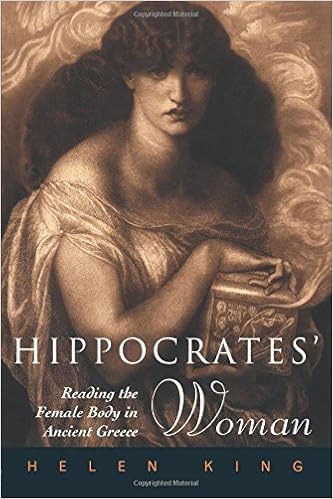
There were various reasons for the lateness; I’d spent eight years in a job which came with a very heavy teaching load (14 hours of ‘contact’ time a week, including teaching the topic of Roman Britain which I’d never even studied, and longer-than-average terms) and I was living with endometriosis, which knocked me out every month. I really can’t remember how I felt about publication day. Probably relieved! Since then, there have been other books, a few even with a small celebratory drink in whichever university department I was in at the time of publication – which, of course, doesn’t mean I wrote that book while in that particular department.
And in a week’s time, there’ll be another book from me with a similar title. Its genesis goes back about ten years.

When I was still working at The Open University, in 2013 they very generously funded two part-time research assistants for a year, to help me progress projects which were otherwise stalled due to administrative responsibilities. This gave me the chance to work with two excellent people. One was Gabriella Zuccolin, who researched for my project on nosebleeds. Yes, nosebleeds: our questions, based on the Hippocratic claim that a nosebleed is an alternative route for menstruation, concerned how far such bleeding was historically gendered and whether it was induced as a treatment. When was a nosebleed in a woman seen as a menstrual one, and when was it just a nosebleed? There are also great questions about ‘vicarious menstruation’ more generally, which I’ve introduced here. Gabriella wrote a great blog post on yarrow as part of her work, and we co-wrote a piece for a collection on blood in early modern history, Blood Matters. The other research assistant was Jo Brown, and during the project we did a little video on what we were doing for Classics Confidential in which we talked about how it all started and what Jo was discovering.
And now, the book of that second project will be out on 14 November! Hippocrates Now is aimed at a wide audience; people interested in classics and in the history of medicine, but also those who’d like to be taken on a journey through the various places where we meet Hippocrates today, mostly online. That means thinking about Wikipedia, Twitter, health sites, TripAdvisor… It’s a book stimulated by one of my favourite questions: how do we know what we know? Writing this book has been a real challenge. Occasionally, when I met a particularly dodgy claim about Hippocrates online, I would enter the discussion thread, but I felt like an anthropologist unable to intervene in local affairs for fear of changing the very thing I was studying. Just as a hypothetical anthropologist may feel terrible about not helping a person by intervening in some way, so this very real historian has felt terrible about not correcting a factual error which risks being picked up and repeated for many years.
The pitfalls of publishing
In various roles – Head of Department, research lead, REF coordinator – I’ve had my fair share of sleepless nights about books coming out. Some of those books were mine: my monograph The One-Sex Body on Trial came out in 2013, and the first print run had an extra page so they had to be reprinted. Submissions for REF 2014 had to be published by the end of November 2013, so I was seriously worried that I wouldn’t make the deadline. All credit to the publisher: it turned out fine. Other insomniac experiences were about other people’s work. In one job, a colleague who had published just three pieces in the census period and needed a fourth in order to be entered sent her article no.4 to an Italian journal which turned out to have a very relaxed attitude to publication dates (understatement). Her article came out at the very last moment to be entered, and that was only after a lot of correspondence about how it would be OK so long as it was available online even if the paper version of the journal issue followed after the census date.
But all this angst was about the REF and its predecessor the RAE. This time, it’s different. I’m not employed and as far as I know nobody is mentioning me in their REF submission or ‘impact case’. So if the book had been significantly delayed, that wouldn’t have caused grief to anyone. Bizarrely, though, the lack of grief goes with a lack of joy. I’m delighted that the book is out and the family was suitably pleased when the advance copies arrived, but there’s no sense of celebration.
As tends to happen with academic publishing, things have also got out of synch with the one chapter of the book which has a life elsewhere. I first wrote a version of this chapter, on a bizarre thing that happened on the Hippocrates page on Wikipedia, for a book honouring Vivian Nutton. This book is a Festschrift, a technical word for what you get when you ask various former colleagues and former students to write something that feels appropriate for the person being honoured. Festschift pieces are often more light-hearted, even fun, in comparison with chapters in the usual edited volumes in my field. I was invited to write this piece in 2014, before I’d even thought about writing Hippocrates Now, but the Festchrift comes out two weeks after my book does [update – the date subsequently changed and now it’s due on 31 January 2020!], because edited volumes take much longer than monographs to make it into print; there are just so many writers to manage, plus the editor(s) can’t write the intro until they’ve seen the whole text. And, as you’d expect, I developed and also changed some of the content when I reworked the material in this chapter for my very own book. So the final version comes out before the early version. Academic publishing: a funny old world.
Getting it out there
I very much want people to read what I’ve written, so I was pleased when the publisher asked me to agree to an open access version being included in Bloomsbury Collections via Knowledge Unlatched. That means you can read all of it, free, now! As most of the endnotes (yes, I much prefer footnotes too, but that’s life) are to webpages, it makes sense to have the electronic version. Incidentally, I now appreciate the nightmare of writing anything that tries to analyse the web, as the urls change so readily and even the wonderful Wayback Machine can’t always help when a page disappears. Sometimes it doesn’t matter, because the page will have been copied (with or without attribution) on other sites, but it’s frustrating when you can’t point your reader to your evidence for a statement.
In order to make some of my arguments even more easy to find, I’ve also written three blog posts for blogs which cover the subject areas with which the book is most concerned. One is in BMJ Medical Humanities and covers the culture of quoting ‘Hippocrates’. Another is in Eidolon, and looks at the phenomenon by which people, in the past and now, think they know exactly how Hippocrates would have reacted. And then there’s one more, for the Classical Reception Studies Network on studying work on Hippocrates through the model of fan fiction. Hope you find these interesting!
 The retiring academic
For future reference, if you want a web page available later, you can explicitly ask the Wayback Machine to save it for you. See, eg, https://help.archive.org/hc/en-us/articles/360001513491-Save-Pages-in-the-Wayback-Machine
LikeLike
Love it. One of the advantages of working on Wikipedia is that all edits are visible forever – but I like the idea of harnessing the Wayback Machine.
LikeLike