
So, it’s been nearly a year now. Time to reflect again on what this ‘retirement’ thing is. It certainly hasn’t meant stopping research, writing, outreach or teaching; in fact, weirdly, I recently did more teaching in the traditional sense of face-to-face contact with students than I’ve done in the last six years or so! This was because I had a very busy, very enjoyable week: my first of (probably) four separate weeks over the current academic year at Gustavus Adolphus College, St Peter, MN as a Rydell Visiting Professor. It’s a liberal arts college with just over 2000 students, and my role is to act as a catalyst. Fun! However, what has struck me over the last few weeks is how, even without an official ‘catalyst’, things precipitate other things. They react together in an intellectual chemistry which unites all the different areas of life which most interest me, and maybe that’s what retirement should be about.
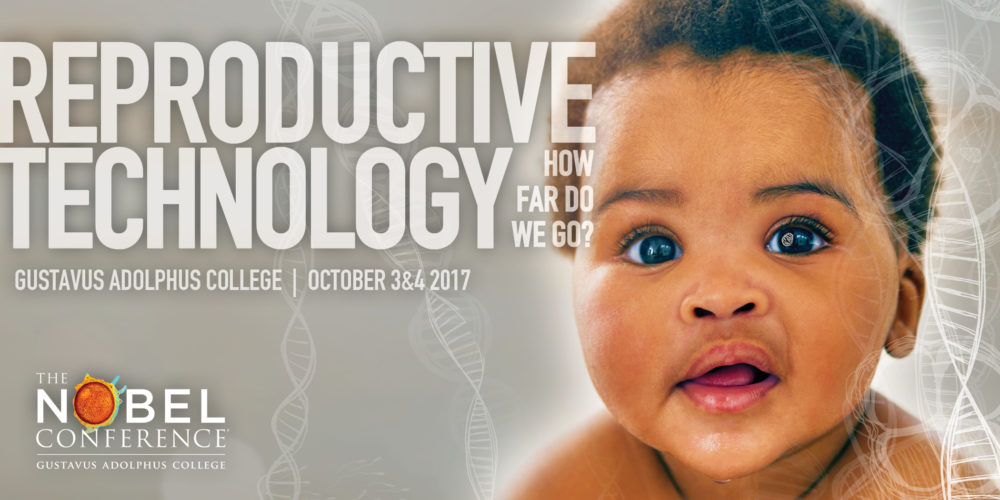
That October week at Gustavus is no guide to what the others will be like, because it started with a very special two days at their Nobel Conference. The theme was ‘Reproductive Technology: How Far Do We Go?’ One of the most enjoyable aspects of retirement has been the chance to return to being the bookworm I once was, so I got into the topic through reading a novel on the plane; recommended to me at a conference on holism and ancient medicine a few weeks before my flight (and yes, I’m still giving papers at conferences), this was Helen Sedgwick’s The Growing Season, which imagines a future in which human reproduction has been revolutionised by the ‘pouch’, an external womb. The novel was so interesting, and so relevant to the funded project on ‘The Risks of Childbirth in Historical Perspective’ on which I continue to work, that I wrote a review of it for the project website. Fiction, science fiction, history and the body: so many of my interests came together here.
The Nobel itself was great. It was very busy in terms of talks and discussions ; it had a proper academic procession with gowns and hoods, which made it feel ‘special’; every single talk and discussion combined medicine and science and ethics in a really exciting way. I was looked after very well indeed, with two students and a faculty member assigned as my ‘minders’ to make sure that I was in the right place at the right time, and to answer all my questions about life at Gustavus. There was a huge (3000 people there? a couple more thousand online?) audience including lots of high school students. There was a concert and also a dance performance on the theme, as well as an improv comedy session. I learned a huge amount; I like to learn. My reactions have already been storifyed here.
After the two Nobel days, I then had two more days doing that catalyst thing with a range of classes, including ‘Human Anatomy and Physiology’, ‘Introduction to Chemistry’ and ‘Lifespan Development’. This involved activities ranging from analysing some Greek myths about conception and birth to reading the 1923 Hadow Report on ‘Differentiation of the Curriculum for Boys and Girls Respectively in Secondary Schools’ and discussing how it uses science to reinforce gender roles. I enjoyed this very much.
But, because I was with classes for four or five hours a day, I also appreciated one of Gustavus’s special features, the Daily Sabbath. It’s a chance to take time out as a campus. All classes stop and while some head to the chapel others head for a coffee. I was only able to attend one of these Sabbaths, and it was the Friday one, which meant some wonderful piano and flute music. Because everything reacts together, on my return home I wasn’t surprised to find that a Baptist friend in training for ministry is writing an essay on the concept of Sabbath and wanted to hear more about how Gustavus does it.
There were also bonus events. Dan-el Padilla Peralta from Princeton was visiting campus to speak, and he was excellent; he made me aware of the complexities of what we mean by citizenship, as he linked ancient societies to his own experiences in the US. His love of books is inspiring; he wrote,
In my application to Princeton, I tried to explain how reading books had allowed me to create and imagine for myself all these different identities that I could inhabit. Books provided me with the raw material I needed to construct a vision of what not only my future but my family’s future, my community’s futures, should look like.
I really don’t understand the US, and Dan-el’s perspective of the undocumented – the visa over-stayers – was new to me. It was great timing that his visit to Minnesota overlapped with mine. I was also particularly thrilled to have an invitation to come and talk to members of the Gustavus Womyn’s Awareness Centre and I found that, in the process of talking about my career, I was finding connections I’d not seen before. All it needs is a group of interested and interesting people…
On the Saturday, my host Yurie Hong took me along to the Classical Association of Minnesota for their annual event, where Dan-el was also speaking, this time on slavery. It was great to meet local Classics teachers and to hear about what’s happening in high schools. This being Classics, of course, the talks given on how to teach were diverse and often surprising. We sang along to one teacher’s guitar accompaniment to ‘Prometheus Bound’, based on the Simon and Garfunkel classic ‘Homeward Bound’, and saw another teacher’s replica artefacts to show different forms of writing from antiquity; I made a note to contact my PhD student who works on Roman magic, Adam Parker, to let him know you can buy papyrus online to make replica ancient papyri. This turned out to be excellent timing, as he was about to do an outreach event in a school and was very keen to have some papyrus on which to write out spells! Another catalyst moment…
At the Classical Association of Minnesota meeting, Yurie spoke about teaching Roman foundation stories through comparison with the musical Hamilton. I’m not only excited about classical reception, I’m a huge fan of musicals – particularly those of Stephen Sondheim – and the audio clips Yurie shared made me wonder how this one had managed to pass me by. It’s a phenomenon in so many ways, not least because the audio of the whole musical is available online, along with the lyrics including crowd-sourced annotations. You can also watch an extraordinary series of videos on how the music works, on the appropriately-entitled How Hamilton Works. One of the benefits of combining retirement with a Visiting Professor role is that I’ve had the opportunity to follow up the things I’ve learned; so I’ve been studying Hamilton since I returned to the UK. This is intellectual chemistry at its best; the last few weeks have involved connecting groups of students and ideas, connecting fiction and science, connecting a Baptist minister with a Lutheran college, connecting a PhD student with a source of papyrus, and having the leisure to make connections between many of my own interests.

 The retiring academic
“One of the benefits of combining retirement with a Visiting Professor role is that I’ve had the opportunity to follow up the things I’ve learned” — in other words, you now have the time to be an academic!
LikeLiked by 1 person
You are so right…not only reading novels, but also doing far more reading of a non-fiction nature than I have in recent years!
LikeLike
I really couldn’t like this more.
LikeLiked by 1 person